Confirmation Discernment 2006

Is God knocking on the door of your heart? Are you feeling like there is more in life? Are you looking for a God who loves you through thick and thin? Welcome to the Episcopal Church. Welcome home.

Wednesday, April 05, 2006

The Gospel of Mark (NRSV)

THE GOSPEL OF MARK


I have made available here, the location of the entire text of the Gospel of Mark which we will be studying. It is the shortest of the four Gospels and moves quickly through Jesus ministry. It does not contain a birth narrative. Jesus appears fully grown at the River Jordan seeking baptism at the hands of John the Baptist as the Gospel opens.

I recommend that you take the following actions to begin your study of this most powerful Gospel:

1. Copy the entire Gospel into a Word document format so that you can have it in a form that allows you to write your own notes about the text or questions you might have as you read it. This also allows you to have your own copy of the text to carry with you and to mark up as you see fit.

2. Begin reading the first chapter of the Gospel. Do not rush through this chapter. Read and re-read it. As you read, pay attention to things in the text that trouble you, amuse you, anger you, frighten you, confuse you, or make you want to read more or put the whole thing down and forget it altogether. The Gospel is intended to move you emotionally and to stir up the many feelings that are described above. Jesus' own disciples moved towards him and away from him during their time with him. Their final day with Jesus, they all left him.

3. Post comments about first chapter on this blog. You can do this anonymously or use your own true identity.

4. Pick a verse or two from the first chapter that you would like to memorize and make it part of your daily prayer life. Make a copy of these verses and carry them with you in your pocket, purse, or wallet. Make an effort to pull the verses out and repeat them over and over again until they are part of your memory. Post these verses on the blog under this entry.

Here is an example of a verse from Chapter One:


9 In those days Jesus came from Nazareth of Galilee and was baptized by John in the Jordan. 10 And just as he was coming up out of the water, he saw the heavens torn apart and the Spirit descending like a dove on him. 11 And a voice came from heaven, "You are my Son, the Beloved; with you I am well pleased."

12 And the Spirit immediately drove him out into the wilderness. 13 He was in the wilderness forty days, tempted by Satan; and he was with the wild beasts; and the angels waited on him.

Why do this, you may ask.

To be a baptized and confirmed Christian means that we desire to be formed by the Gospel message. Formation happens as we embrace the message by memorizing verses that get our attention as we read; allowing the text to raise questions, hopes, doubts, fears, and love in our hearts and minds.

The message of the Gospel enters our souls as we repeat prayers, passages of scripture, hymns, and practice other forms of meditation. We come together each week to hear and receive the Word of God. We repeatedly put these words on our lips so that they can move to our minds on the way to our hearts. It is in the heart that we are truly and deeply formed by the Word, but it can not get into our hearts if it is not first on our lips and in our minds.

5. The formation of the heart changes the way we think, speak, and act towards ourselves, God, and others.

What changes might you expect to see in your life as a result of this time of study?
Everyone is formed by some "word." What we will discover is how profoundly we have been already formed by a word or set of beliefs. These words and beliefs determine how we relate to one another.

As you read the Gospel of Mark, you will tend to read it and understand it according the beliefs you bring to the reading. These beliefs may be your best understanding of what you believe to be the Christian faith or they may be your sense of things you have learned from parents, teachers, the media, or other influences in our world.

6. Be prepared to have your ideas and beliefs challenged and changed.

God's Peace in the Word Made Flesh,
Bob+

A Photo of Samuel Seabury and a biography


American Episcopate
(From the Anglican Kalendar)

A crucial date for members of the Episcopal Church in the United States of America is the consecration of the first Bishop of the Anglican Communion in the United States. During the colonial era, there had been no Anglican bishops in the New World; and persons seeking to be ordained as clergy had had to travel to England for the purpose. After the achievement of American independence, it was important for the Church in the United States to have its own bishops, and an assembly of Connecticut clergy chose Samuel Seabury to go to England and there seek to be consecrated as a bishop.

However, the English bishops were forbidden by law to consecrate anyone who would not take an oath of allegiance to the British Crown. He accordingly turned to the Episcopal Church of Scotland, which had no connection with the government (having originated around 1690 with the non-Jurors: those Anglicans who, having sworn allegiance to James Stuart, would not during his lifetime swear allegiance to William of Orange, and who were accordingly all but outlawed under the new dynasty), and was accordingly free to consecrate him without political complications.

In Aberdeen, 14 November 1784, Samuel Seabury was consecrated to the Episcopate by the Bishop and the Bishop Coadjutor of Aberdeen and the Bishop of Ross and Caithness. He thus became part of the unbroken chain of bishops that links the Church today with the Church of the Apostles.

In return, he promised them that he would do his best to persuade the American Church to use as its Prayer of Consecration (blessing of the bread and wine at the Lord's Supper) the Scottish prayer, taken largely unchanged from the 1549 Prayer Book, rather than the much shorter one in use in England. The aforesaid prayer, adopted by the American Church with a few modifications, has been widely regarded as one of the greatest treasures of the Church in this country.

PRAYER (traditional language)
We give thee thanks, O Lord our God, for thy goodness in bestowing Upon this Church the gift of the episcopate, which we celebrate in this remembrance of the consecration of Samuel Seabury; and we pray that, joined together in unity with our bishops, and nourished by thy holy Sacraments, we may proclaim the Gospel of redemption with apostolic zeal; through Jesus Christ our Lord, who liveth and reigneth with thee and the Holy Spirit, one God, now and for ever.

PRAYER (contemporary language)
We give you thanks, O Lord our God, for your goodness in bestowing Upon this Church the gift of the episcopate, which we celebrate in this remembrance of the consecration of Samuel Seabury; and we pray that, joined together in unity with our bishops, and nourished by your holy Sacraments, we may proclaim the Gospel of redemption with apostolic zeal; through Jesus Christ our Lord, who lives and reigns with you and the Holy Spirit, one God, now and for ever.

An Interesting History of the Episcopal Church

NOTE TO GROUP: The article written below comes from an Episcopalian who is in orders.John-Julian is a member of the Order of Julian of Norwich which is an Episcopal order located in Wisconsin. Here is their web site http://www.orderofjulian.org/home.html. What John-Julian presents is more than just a commentary on the current debate within the Episcopal Church regarding sexual orientation. His presentation gives the average person in the pew an interesting overview of the Episcopal Church in the United States of America. I look forward to any comments or questions this piece may inspire in you. Bob+


We have been told that the consecration of a partnered gay man as a bishop, and the occasional blessing ofsame sex unions in the Episcopal Church are drastic(and intolerable) departures from Anglican tradition. And yet, the Episcopal Church itself was founded ONLY because of a series of many "drastic changes in Anglican Tradition"! These changes arose then (as they do now) from the independent nature of the new national Episcopal Church and the national culture in which it found itself. Indeed, it can be truly maintained that the "secular culture" of the new United States actually shaped the entire character and polity of the Episcopal Church from the very beginning.

Back in the late 18th century, the Church of England in the American colonies by necessity underwent a cataclysmic transformation. It was a transformation that many could not, would not, and did not accept. During the Revolutionary War, a great many Anglican clergy in America simply closed the doors of their churches, rather than break their ordination vows by altering the Book of Common Prayer to remove the prayers for the King.

Some Anglican clergy simply packed up and fled to Canada or returned to England. Some clergy fled to the colonial wilderness and actually lived in caves in the forests. Some clergy were tarred and feathered and ridden out of their towns on a rail. Some were arrested by the patriots and imprisoned. Some were tortured and murdered. Some few abandoned their ordination vows, crossed out the offensive bits of the Book of Common Prayer, and became rebellious patriots. [A DRASTIC CHANGE IN ANGLICAN TRADITION!]

Then when the gentlemanly and well-intentioned William White suggested the possibility of presbyteral ordination for American Anglicans (given the absence of an Anglican bishop), a tiny and secret rump conclave of Anglican clergy in Connecticut reacted in dread, and with no other external authorization than their own consciences, meeting secretly after their diocesan convention, they did what had never been donein the history of the Church of England: they elected a bishop. [A DRASTIC CHANGE IN ANGLICAN TRADITION!]

Their first choice, Jeremiah Leaming, pleaded illhealth and opted out, but Samuel Seabury, Tory to the core, active loyalist during the War, chaplain to the King's regiments, once imprisoned by the patriots,accepted the election and braved the long sea voyage to England to seek consecration. . [A DRASTIC CHANGEIN ANGLICAN TRADITION!]

Both English Archbishops gave Seabury very much the cold shoulder. A bishop elected by mere clergy? There was no such thing! A bishop without temporalities or endowment? No such thing existed! An Anglican bishop who had not pledged allegiance to the Crown? A canonical impossibility! A bishop for a cluster of colonies who for over a hundred years had purposely been refused a bishop by both Church and Crown?Ridiculous! A bishop not answerable to a secular parliament? Laughable! What was proposed by Seabury and his electors was an utterly impossible departure from Anglican tradition and polity! And both Archbishops rejected it out of hand. [A DRASTIC CHANGEIN ANGLICAN TRADITION!]

The British generally thought so little of Seabury andhis project that the Prime Minister, Lord North, even lost (sic!) Seabury's credentials and the bishop-elect had to write (and wait) for replacement documents.Ambassador John Adams (who had been an outspoken foe of even the idea of a colonial Anglican bishop)actually negotiated an offer from the Danish Lutheran Church to consecrate Seabury but Seabury was cautioned against the Danish offer by the Rev. Dr. Martin Routh(soon to be President of Magdalen College, Oxford) and Robert Lowth, Bishop of London.

William Cartwright, a non-juring bishop in England offered to consecrate Seabury, but by then the second-generation non-juringorders were mildly suspect and Seabury chose not to accept the offer.Finally, with further permission from his constituents, Seabury headed off to the tiny Episcopal Church of Scotland (which was only barely legal by Scottish law and was not allowed even to have church buildings in Presbyterian Scotland), and there he received consecration by three Scottish bishops in an upstairs room of one of the bishops' home. [A DRASTIC CHANGE IN ANGLICAN TRADITION!]

Seabury brought the episcopacy home to America(stopping in Newfoundland on the way to visit his Tory and Loyalist relations). Canterbury, York, the Crown,and Parliament THEN finally surrendered -- after Seabury had by-passed them -- and agreed to provide consecration for White and Provoost. (The latter was so opposed to Seabury's "irregular" consecration that he refused for five years even to be in the same room as Seabury!) [A DRASTIC CHANGE IN ANGLICAN TRADITION!]

In 1790, the first official General Convention of the Episcopal Church was held. (Provoost fortuitously being ill, Seabury and White alone comprised the House of Bishops.) The Constitution and the Book of Common Prayer were approved, and the "Protestant Episcopal Church in the United States of America" came into being -- an ex-colonial church! [A DRASTIC CHANGE INANGLICAN TRADITION!]

And ALSO, since the Church of England was "incommunion" with this first province of the Church outside the British Isles, the "Anglican Communion" can be said to have come into being in 1790. And it came into being in an extremely revolutionary way which shocked any true Anglican of the day: governed by a democratic synod (including even laity!), with bishops freely elected by not only the clergy but also the laity, with financial support by voluntary offerings (or pew rent), and with mutual recognition and affection (but legitimate independence) from Canterbury and the Crown. [A DRASTIC CHANGE IN ANGLICAN TRADITION!]

That was -- and that is -- the Episcopal Church. It was(and had to be) its own authority and it had (and had to have) its own independence from the Church of England. The American Prayer Book was similar but with a few important differences. The Athanasian Creed had been omitted, and the Scottish Episcopal Church(through Seabury) had influenced the inclusion of an epiclesis in the American Communion service (there being no epiclesis in the British Book of Common Prayer at the time). [A DRASTIC CHANGE IN ANGLICANTRADITION!]

The Episcopal Church itself has been, since its very inception, A DRASTIC CHANGE IN ANGLICAN TRADITION! Then that Church began (finally) to ordain Black clergy; then that Church began to ordain women; then that Church began to ordain partnered homosexuals as priests; then that Church began to ordain partnered homosexuals as bishops. That Church never ceases to lead the rest of her brother and sister Anglican Churches as she did from the moment of her conception!

John-Julian, OJN

Thursday, March 30, 2006

Junk Food or Soul Food

Thursday, March 30, 2006

Spiritual Junk Food versus Healthy Soul Food (visit The Gospel Reflection blog at http://christchurchrbgospelreflections.blogspot.com/ for the Gospel Reflection for this week. This contains the focus of our conversation last night. Please feel free to post either here or on the other blog.

Saturday, March 25, 2006

Dr. Martin Luther King Jr. at Grace Cathedral


I have posted the Grace Cathedral web site location where you will find a speech given by Dr. Martin Luther King Jr. in 1965.

http://www.gracecathedral.org/enrichment/crypt/cry_20021002.shtml

Please take some time to listen to what Dr. King had to say on that day. I was just finishing high school in 1965 and on my way to California State College at Long Beach. Dr. King had a big impact on my life.

As I listen to him nearing my 60th year of life, I am still moved by his words. He was very somber during this critical time in American history.

What do you think of his sermon?


If you were not alive in 1965, can you imagine what life was like for our Black citizens at that time?


In 1965, Dr. King was sometimes treated as if he were an enemy of the United States. How is it that today we honor Dr. King with a national holiday?


How did Dr. King's death impact the Civil Rights movement?

Any thoughts on what Dr. King said in his sermon?

Episcopal Dictionary As Requested

Have you ever wanted to have a dictionary that let's you quickly and easily look up words that you hear used in the Episcopal Church? Well, here is the link for that very dictionary. Just copy and paste this link into your browser and then press enter.

http://www.holycross.net/anonline.htm

Once you get to the address, just remember to save it as one of your favorite sites so you can easily find it again and again. Here are some words for you to look up and bring with you to class on Wednesday.

Ablutions

ABC

agnus dei

burse

chasuble

The Epistle

miter or mitre

Presiding Bishop

Real Presence

Senior Warden

Thursday, March 09, 2006

Basic Christianity (From ECUSA Web Site)

Welcome to the Episcopal Church!

The Episcopal Church strives to live by the message of Christ, in which there are no outcasts and all are welcome. Walking a middle way between Roman Catholicism and Protestant traditions, we are a sacramental and worship-oriented church that promotes thoughtful debate about what God is calling us to do and be, as followers of Christ.

Exploring this section may answer some of your questions - or raise additional ones! Visit a church, or three, to find out more. The best way to learn about the Episcopal Church is to become a part of it!


The Story of Jesus, in Brief


The religion of “Christianity” is established on the life, work, death, and resurrection of a man named “Jesus of Nazareth,” as the story is told in four books of the Christian Bible, known as the “Gospels” (which means “Good News”).
According to the Bible, Jesus was a Jew who lived about two thousand years ago in the region of Israel, and who spent some three years of his adult life traveling around, teaching, preaching, and performing miracles of healing and feeding with his twelve disciples.

Although he became popular with multitudes of people around him, he also made the Jewish leaders of his day angry by the things he was preaching and doing. Jesus became so popular, in fact, and the leaders were so upset by his activities, that finally, he was betrayed by one of his own disciples to the authorities, and the Roman government put him to death by nailing him to a wooden cross outside of Jerusalem.

The story might have ended there, except that three days after he had died and been buried, he came back to his disciples, resurrected—fully and physically alive. For another forty days, Scripture says, he spent time with his disciples and commissioned them to continue in his teaching and miracles, and spreading the good news of his life, work, and resurrection to others. Finally, according to the Bible, he returned to Heaven—body and all—to be with God, where, Christians believe, he lives on and continues to be present with us forever.


Q: What is the great importance of Jesus' suffering and death?

A: By his obedience, even to suffering and death, Jesus made the offering which we could not make; in him we are freed from the power of sin and reconciled to God.

from "An Outline of the Faith," Book of Common Prayer, 1979.


What do Christians Believe…?…about God, Jesus, and the questions of life and death?

Over time, Christians have come to this understanding about God, about Jesus, and about who we are in relation to God, based on the example and commandments of Jesus’ life, teaching, and resurrection:

Creation is Good

God has made all that there is, and all that God has made is good, including us.

We Are Chosen

God has chosen us (initially meaning the people of Israel, but now all who believe in God) as a special people, and has promised to love, care for, and be faithful to us forever.

We Turn Away From God

Because we are human, however, throughout history and again and again, we have not kept our promises to God, nor followed the ways that God has called us to follow—we make mistakes, and worst, we choose (either by action or inaction) to harm others, the creation, and ourselves, and thereby turn away from God.

God did not Abandon us

Yet God has never given up on us. God has sent us prophets, teachers, and others to call us back to God from the selfish and harmful things we do.

God Sent us Jesus Christ

Ultimately, Christians believe, in order to save us from the consequences of our own actions, God sent us Jesus Christ, God’s Son. In Jesus, God became a human being, born of a human woman, to live with us, to share our weakness, to suffer as we suffer, and to die as we die, in order to show us directly how God loves us and wants us to live with one another.

Jesus was Raised from Death to Life

We believe that as a fully human person, Jesus died on the cross at Jerusalem, just as all humans die, yet death could not keep him, and so he was raised from the dead to life again. We celebrate this miraculous truth on Easter, and in fact, on every Sunday.

God won the Final Victory Over Death

Through the miracle of Jesus’ Resurrection, God has won the ultimate victory, once and for all, in the human reality of life and death: Because Jesus was raised from the dead, we understand that although we, too, will ultimately face death as Jesus did, God will not abandon us, either, and we, too, will have new life. All that we are, which is so precious to God, will be brought to new and unending life.

In Jesus, we see God

Christians believe that Jesus is the complete revelation of God to us, and as such, Jesus, although fully human with us, is also fully God—fully divine. His two natures, both human and divine, make it possible for us to be related to God in a way that was not possible before. Through Jesus Christ, we are adopted as children of God.

We are the Body of Christ

As Christians, we believe that together we form the Body of Christ: Our love of God and of one another binds us together and makes us One. Our principal mission is to carry on the work and life of Jesus Christ, to spread the good news about God’s victory over death, to lift up the poor and heal the sick, and to work to heal the divisions among people, so that we can live together in the fullness of the example of Jesus Christ. Together, we continue to be Jesus’ human presence in the world.

Christ will Come Again

Jesus promised his disciples, before he was taken away to his Father, that he would come to us again. Christians live in hope, waiting for Christ's coming again, when he will sit in judgment over the living and the dead, and his reign will never end.


"O God, through your Son you have bestowed upon your people the brightness of your light: Sanctify this new fire, and grant that in this Paschal feast we may so burn with heavenly desires, that with pure minds we may attain to the festival of everlasting light; through Jesus Christ our Lord, Amen."
from the Lighting of the Paschal Candle, the Great Vigil of Easter, Book of Common Prayer, 1979, p. 285


How did we Become the Church? Some basic Church history


The Early Church
After the resurrection, Scripture tells us, Jesus promised to send the Holy Spirit to be with the disciples. When that happened, the Church was born. The Disciples began to gather more followers for Jesus, and continued to teach them. The more people learned about Jesus life, death, and resurrection, the more excited they became about changing their lives to be closer to Jesus and his followers’ example.

They sold their possessions and gave the money to the poor. They prayed and celebrated the resurrection every Sunday. They traveled throughout the region and one person in particular, whose name was Paul, felt that he was sent my God to bring this good news not just the Jewish people, but to all people he could find.

The Church grew, in spite of tremendous persecution, first from the Jewish communities to whom they were preaching about Jesus, but then from the Romans. The Roman Empire was threatened by the Christians’ refusal to worship the Emperor, as well as by the “unnatural” ways in which they loved their enemies and did good to their persecutors. Many, many Christians were executed for their beliefs, and many of the “Saints” whose lives we celebrate still today were among them.

The Orders of Clergy: Deacons, Bishops, and Priests

As the communities grew, the disciples of Jesus (known by this point as “Apostles,” from the Greek word for “one who is sent”) could not manage to lead all the new churches and still keep up the work of caring for the poor and disenfranchised, so they appointed help. First, they chose “deacons” (from the Greek meaning “servant”) to carry on the work of feeding and caring. Next, they appointed “overseers,” whom we call bishops, to watch over the churches. As the Apostles died and the churches grew, the bishops appointed “priests” to help them. Thus the main “orders” of the clergy were founded: Bishops, Priests, and Deacons.

Over the first three centuries of the history of the Church, the Bishops established the fundamental doctrines and practices that still today govern the life of churches all over the world.

Different Kinds of Church

Through the first centuries of Christianity, the Church was a sort of loose association of worshipping communities, most of which met in people’s houses. This Church was referred to as “catholic,” which really means “universal.” “Catholic” technically means, “All the Baptized Members of Jesus Christ.” As Christianity spread, the bishops worked hard to standardize their beliefs and practices to make sure that everyone had the same story, even if their experiences of God were richly diverse. By the fourth century, the fundamental doctrines of the Church had been formalized into the Nicene Creed. There continued to be tension, however, across the Church concerning all sorts of matters, including worship and technicalities of theology. The geography and diversity of the Church grew until it finally split into two parts in the 11th Century between two cities: The Roman Catholic Church, based in Rome, Italy, and the Eastern Orthodox Church centered in Constantinople, now Istanbul in Turkey. Each part claimed to be the “true church.”

In Western Europe in the 16th Century, tensions in the Roman Catholic Church had grown again to the point that another “schism” (or split) took place, led by Martin Luther and is commonly referred to in Western history as the “Reformation.” The “Lutheran Church,” which grew out of Luther’s ideas, was the first of the so-called “Protestant” Churches (because of their “protest” of Rome). From that point on, the Church has continued to fracture into more and more denominations, depending largely on the way their governing bodies make decisions (called “polity”), their arguments about aspects of Christianity (at what age Christians should be baptized, for instance), or their styles of worship.

What Makes us Christian?


In spite of two thousand years of growth and change, there are still some hallmarks that distinguish Christianity from all other, similar or not-so-similar, religious sects. While the range of beliefs among Christians can be quite wide, the following represent what is commonly shared.

The Goodness of Creation, Made by God

Most Christians believe that the physical universe, including humanity itself, is fundamentally good, even though human beings cause it harm through their negligence and self-interest. Other Christians hold that while humanity may be flawed, God's love and grace provides a way to perfection and goodness through the teachings and saving presence of Jesus Christ.

The Bible as the Word of God

Christians believe that the Bible is “the Word of God,” and as such, “contains all things necessary to salvation.” While there have been countless books about Christianity written since the Bible, and while many of the other doctrines essential to Christianity have been worked out in them, the Bible is sufficient to knowing God through Jesus Christ and to benefiting from the saving act of the Resurrection. Christians may disagree regularly, however, on how to interpret or apply what the Bible says.

The Trinity: One God in Three Persons

Christians believe in one God, whom we understand to exist in three “persons,” traditionally referred to as “Father, Son, and Holy Spirit.” The three “persons” of the Trinity are God, who created all things, Jesus Christ, his fully human—and at the same time, fully divine—son, and the Holy Spirit of God who gives life to all things and moves through all living things. Contemporary language now acknowledges other images of the Trinity, such as “Creator, Redeemer, and Sanctifier,” but the Trinity remains: One God in three persons.

The Incarnation: God Became Human

Christians believe that Jesus Christ was, at the same time, completely human and completely God, all in one person. This idea was articulated and adopted to address variants to Christian theology (known as “heresies”), which arise from time to time throughout history. One heresy has claimed that Jesus didn’t really die on the cross because he wasn’t really human. An opposing heresy claims that he was really just an important guy with some great ideas, and that he wasn’t really God.

The Crucifixion and Resurrection

Christians believe that Jesus of Nazareth died completely on the cross, that he was buried in a tomb, and that on the third day, he was raised physically again to life to return to his disciples.

Baptism

Baptism is the sacrament whereby people become Christians, and thereby members of the Church. At Baptism, the new Christian (or in the case of a child, the parents or guardians) professes belief in Jesus, renounces evil before the Church, and then is immersed in (or sprinkled with) water three times—in the name of the Father, and of the Son, and of the Holy Spirit. Baptism represents our participation in the death and resurrection of Jesus, and assures us of our salvation through belief in him.

Eucharist

All baptized Christians participate in the Eucharist (from the Greek, meaning “Thanksgiving”) or as it is also called “Holy Communion,” “the Lord’s Supper,” or “The Mass.” The Eucharist was instituted, according to the Bible, by Jesus himself on the night of his arrest, before he was crucified. During the Eucharist, bread and wine are blessed as symbols of Christ’s body and blood. The bread is broken and shared, and then the cup of wine is passed among the worshipers as a sign of Jesus’ sacrifice on the cross and resurrection. The Eucharist is a continual remembrance of Jesus’ life, death, and resurrection until he comes again.

Working for the Reconciliation of the World to God through Jesus Christ

All Christians share in the God’s work of reconciling the world to God’s self. In other words, Christians believe that in Jesus Christ, all divisions among people, all injury, all wrong, and all sinfulness can be healed, and it is every Christian’s responsibility and ministry to work for that healing. Christians believe that there will come a day when the world will be completely at peace, sharing in God’s love, and living as one Body.


The eunuch asked Philip, ‘About whom, may I ask you, does the prophet say this, about himself or about someone else?’ Then Philip began to speak, and starting with this scripture, he proclaimed to him the good news about Jesus. As they were going along the road, they came to some water; and the eunuch said, ‘Look, here is water! What is to prevent me from being baptized?’ He commanded the chariot to stop, and both of them, Philip and the eunuch, went down into the water, and Philip baptized him. Acts 8:34-38
The New Revised Standard Version (Anglicized Edition), copyright 1989, 1995 by the Division of Christian Education of the National Council of the Churches of Christ in the United States of America. Used by permission. All rights reserved.




Thursday, March 02, 2006

Shall We Begin?

Welcome to the Christ Church Confirmation Discernment Blog. This space has been created to allow us to communicate with one another between our times of meeting.

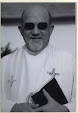
I will be posting photos, like the one in this entry and asking you to respond by giving the picture a title that you think describes what you see; writing about the thoughts, feelings, and insights it brings to your mind, heart, and soul; or responding in some other way. This blog will also provide you with places to visit on the internet that will may be helpful in your time of discernment.

My hope and prayer is for this blog to be well used and spiritually nurturing therefore, we will follow St. Paul's suggestions that we "practice" love and mutual respect in all of our interactions with one another.

The beauty of the blog is that you may post your entries anonymously or you can identify yourself at the end of each posting. I recommend that you pick a name to use at the end of your blog that represents your spiritual hope in your life.